


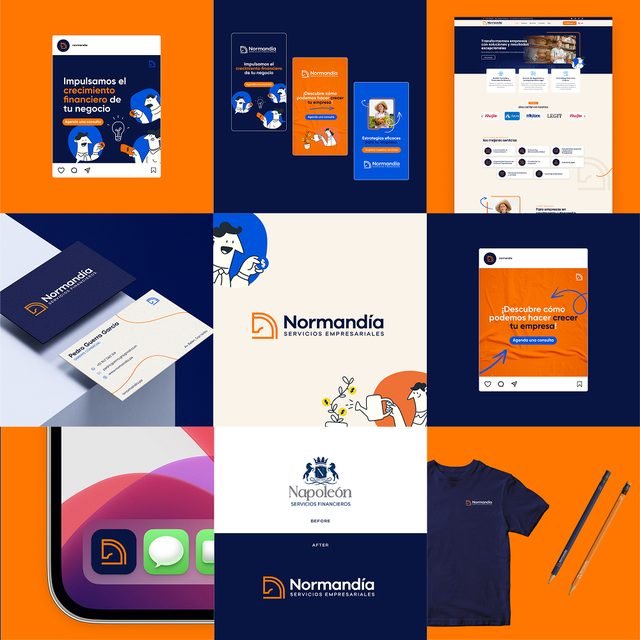
When a small business owner tells me “I need branding”, they almost always mean “I need a logo”. It makes sense, because the logo is the first thing people see. But a logo on its own doesn’t hold up. It looks good in a pitch deck and falls apart the moment it has to sit on an invoice, a shopping bag and a social media profile picture at the same time.
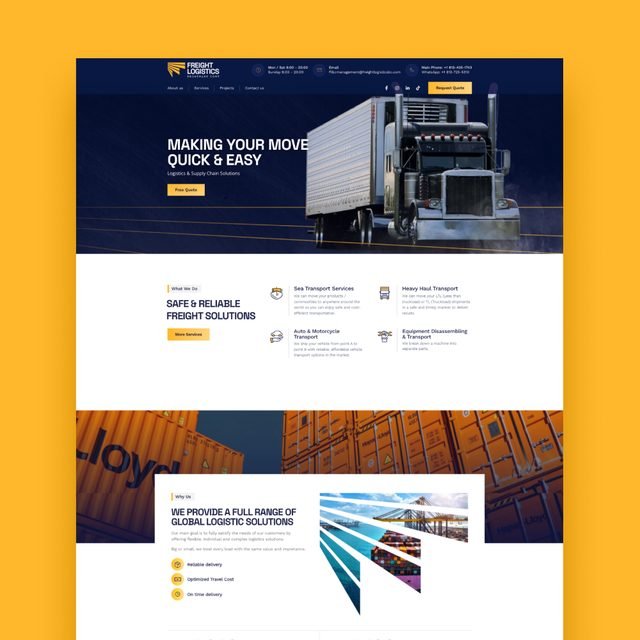
A brand identity is the set of design decisions that make your business recognizable and easy to understand on every channel. Below you’ll find what a brand identity package really includes, how to work out what your business needs and the branding mistakes I’d avoid. If you’re also planning a website, read what a small business website needs to get clients afterwards.
Brand identity vs. logo design: what’s the difference?
Think of the brands you recognize instantly. You don’t tell them apart by the drawing alone. You do it by the color, the typeface, the tone they speak in, the kind of photos they use and even the order in which they tell things. All of that is identity.
The logo is one piece inside that system. If the system doesn’t exist, every time you make something new (a post, a poster, a website) you have to invent again how your business looks. The result is a brand that changes with the day.
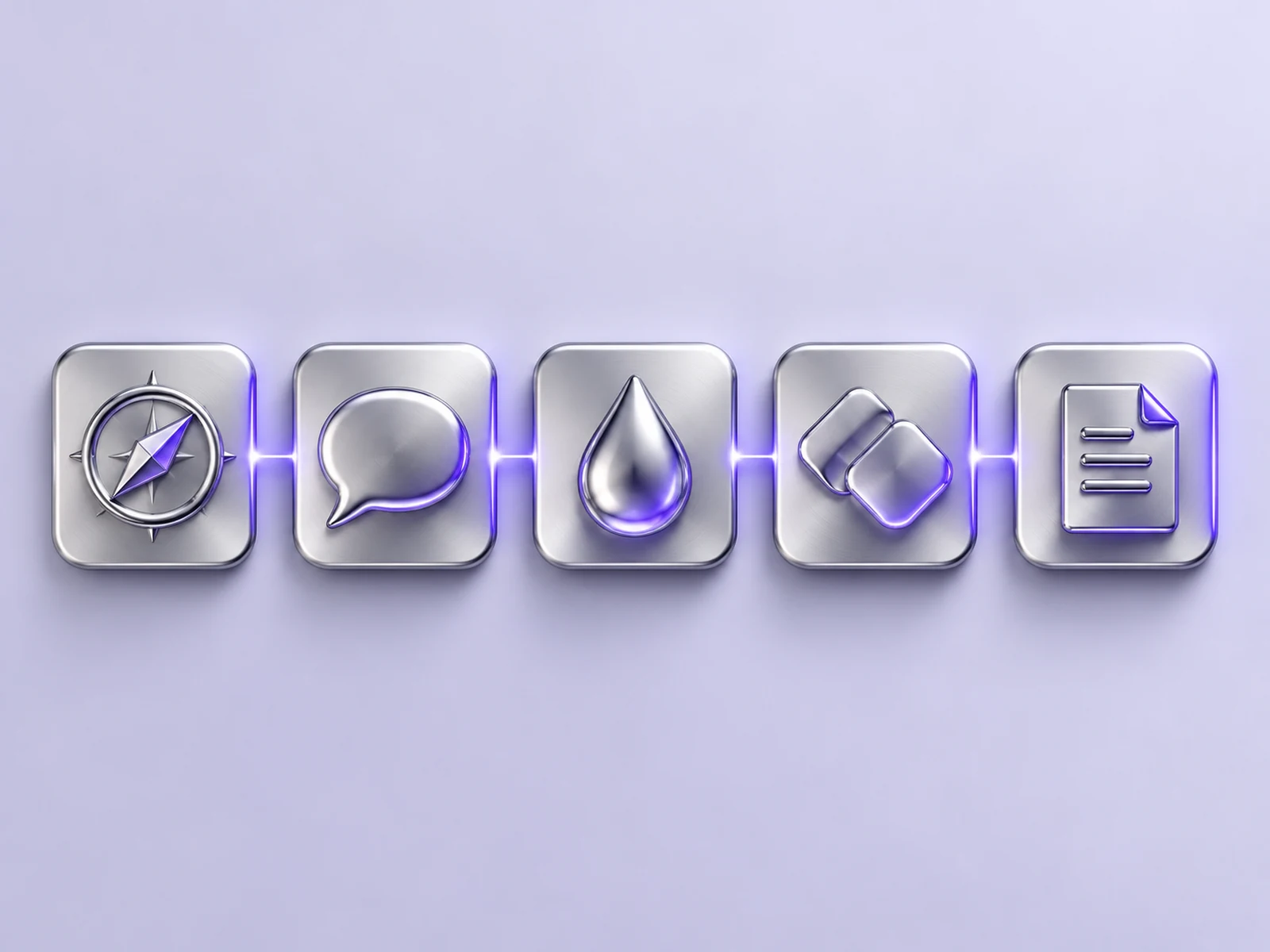
What’s included in a brand identity package: the 5 core elements
1. Brand strategy and positioning
Before drawing anything you have to decide a few things: who you’re talking to, which problem you solve, how you differ from the competition and how you want to be perceived. Positioning, personality and tone of voice come out of that. Without it, design is a bet; with it, design is a consequence.
2. Brand naming
If the business has no name yet, or the current one doesn’t work, naming is part of the job. A good name is easy to say, easy to remember and doesn’t clash with other brands in the sector.
3. Visual identity system: logo, color palette and typography
This is what people usually picture when they talk about branding:
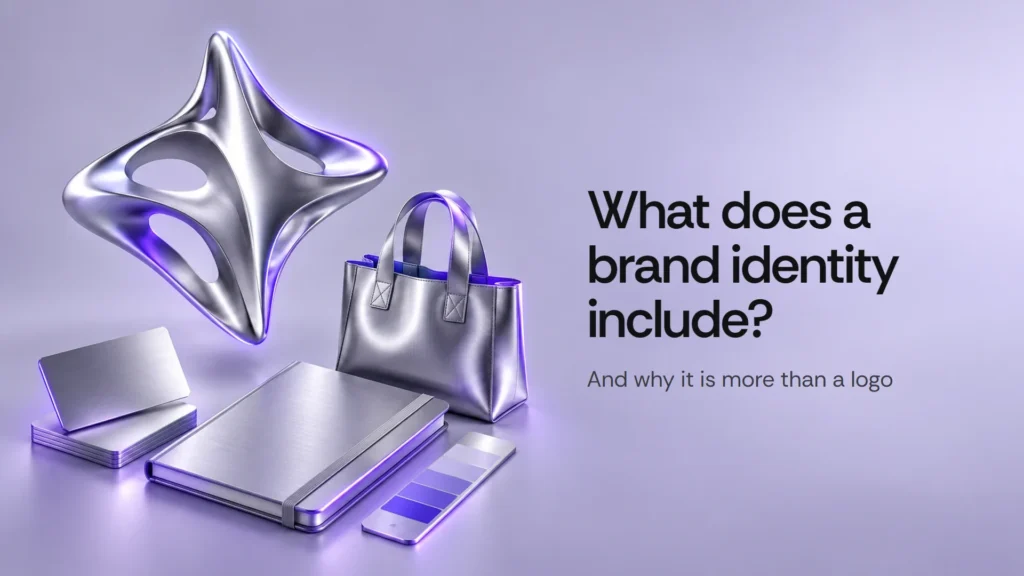
- Logo and its variants: primary, horizontal, small version, single-color version.
- Color palette: the brand colors and how they combine.
- Typefaces: one for headlines and one for body text, chosen to read well on screens.
- Image and icon style: what gets photographed, how things are illustrated, what is avoided.
- Supporting elements: patterns, shapes and textures that give personality.
4. Brand guidelines (brand book)
This is the document that collects the rules: how to use the logo, which colors, minimum sizes, what not to do. It looks like an extra, but it’s what lets anyone (a printer, an agency, you a year from now) use the brand properly without calling me.
5. Brand applications: stationery, social media and packaging
An identity is tested when it goes out into the world: stationery, social media, presentations, packaging, the website. Designing a few key applications proves that the system works and gives you ready-to-use pieces from day one.
How to choose the right branding package for your business
Not every business needs the same thing. This is the quick guide I use to get my bearings.
- You’re just starting: you need the basics done well: a simple strategy, a logo with variants, colors, typefaces and a mini guideline. The rest can wait.
- Your business exists but looks messy: what’s needed is order. Review what works, fix what doesn’t and document it.
- Your brand feels dated or no longer represents what you do: that’s a rebrand. Review the strategy first so you don’t change just the “face”.
- You’re about to launch a website, a store or a campaign: it’s best to have the identity closed beforehand, so you don’t redo the design halfway through.
Common branding mistakes small businesses make
- Starting with the logo: without knowing who you’re talking to, you choose by taste instead of function.
- Copying references: getting inspired is good; looking like your competition makes you invisible.
- Using too many colors and typefaces: a solid brand is usually simpler than people think.
- Not documenting: if the rules live only in the designer’s head, the brand warps over time.
- Thinking only of print or only of digital: today almost everything is seen first on a small screen.
How long does a brand identity project take?
It depends on the scope, on how many rounds of revisions there are and, above all, on how quickly decisions are made. A focused project can close in a few weeks; one with strategy, naming and many applications usually takes a couple of months. What stretches it most isn’t the design, it’s waiting for answers.
Brand identity FAQs
Can I start with just a logo design?
You can, but I recommend defining at least colors, typefaces and a few basic rules. It’s little extra work and it stops the brand from warping.
Does a brand identity package include web design?
They are related but separate projects. Ideally the identity comes first and the website builds on it. If you need both, they can be planned together.
How often should you update your brand identity?
It doesn’t need to change on a schedule. It gets reviewed when the business changes audience, services or ambition.
What’s the difference between branding and logo design?
Logo design is one piece. Branding also covers the strategy, the tone of voice, the visual system and the rules for using it on every channel.
If you want to see how all this plays out in real projects, you can browse the brand identity projects or look at the brand identity design service. And if you’re thinking about your own, tell me where you are and I’ll tell you where I’d start.